The context: textiles between functionality and clean label
- Textile and non-woven manufacturers are looking for differentiating functional processes for their own lines - added-value elements compared with untreated standards.
- Personal care groups with complementary lines (repellents, outdoor protection, natural products) are evaluating the extension of their natural positioning to textile categories, gadgets and outdoor accessories with natural active ingredients consistent with the cosmetics line.
- The R&D departments of the technical textile sector and specialised weavers are looking for suppliers able to guarantee microencapsulation of essential oils with formulation stability, compatibility with existing industrial processes and scalability for volume orders.
The IPS solution: Microgel with microencapsulated essential oils
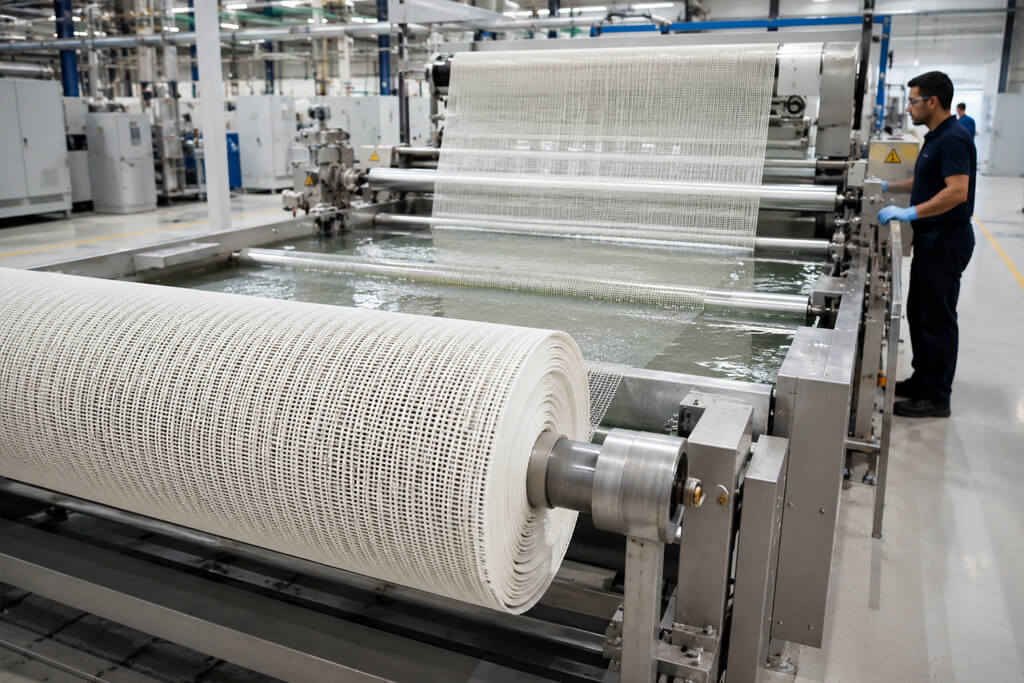
IPS Industrial proposes the use of Microgel to integrate essential oils into the fibre of textiles and non-wovens through standard industrial finishing processes.
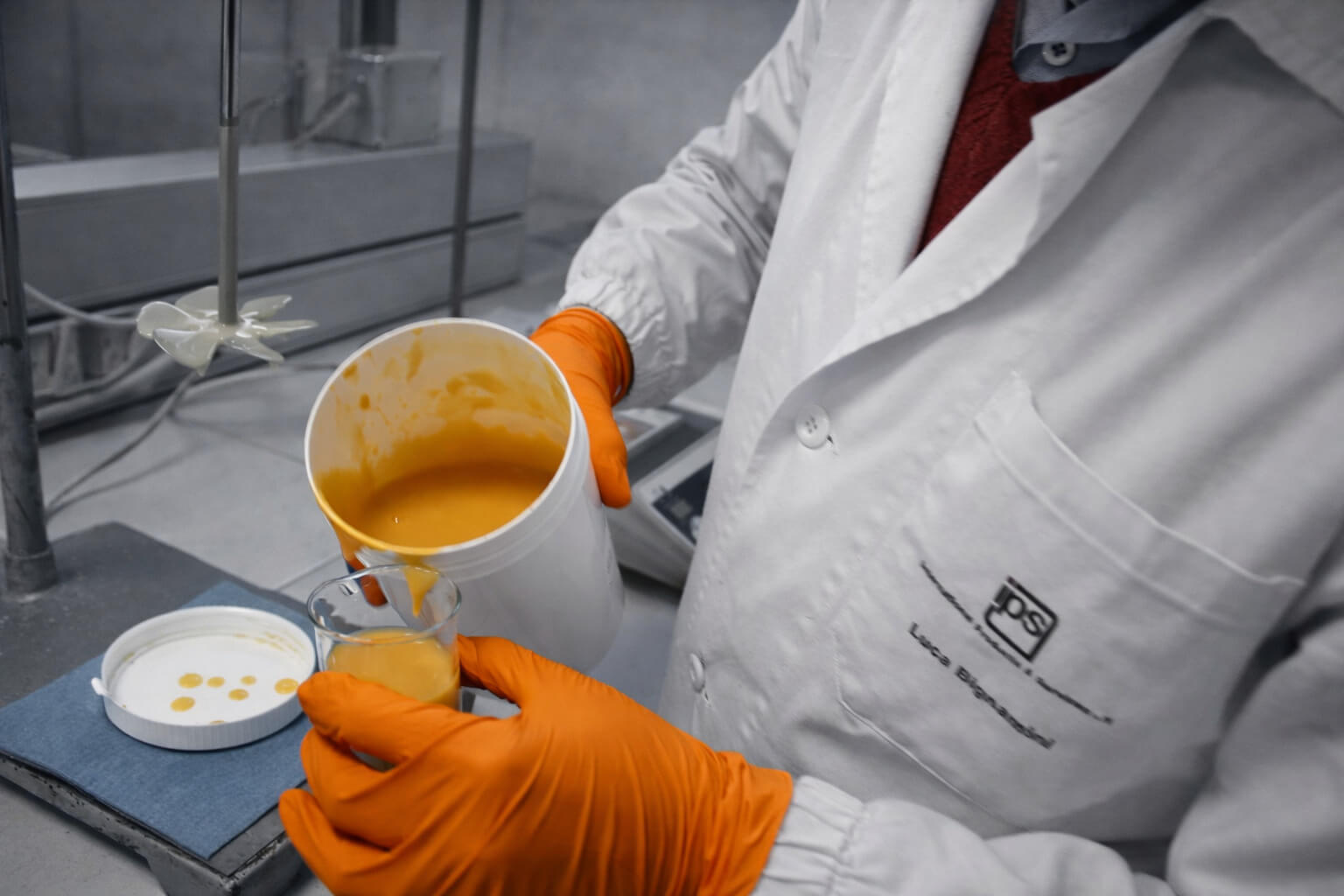
Microgel is a hydroalcoholic formulation in which ultrafine microparticles of lipophilic active ingredient – in this case essential oils – are dispersed in a gel matrix without a coating membrane.
The ultrafine particle size, below 10 um, is the critical technical parameter for this application: it allows a homogeneous distribution and a fine penetration onto the textile fibre – whatever the type of material, from synthetic monofilament to mixed-fibre non-woven – without altering its physical properties, surface appearance or flexibility.
The release of the essential oils occurs through slow evaporation over time, amplified by contact and by ambient or body heat. The homogeneous distribution on the textile ensures uniform activity across the entire surface of the product, in a repeatable way throughout its service life.
Microgel is a vegan-friendly formulation with no components of animal origin – an element consistent with the clean-label positioning of the projects that use it in the personal care sector and in natural residential lines.
The IPS know-how on the integration of Microgel onto textile substrates is documented by the line’s two main case studies: the case study on scented promotional bracelets with Microgel – application onto textile ropes and yarns through dipping processes – and the case study on the integration of microencapsulated essential oil in hosiery yarns – an established industrial application onto fine textile yarns. The same application methodology enables the concept of functional textiles and non-wovens with essential oils.
A note on product claims
Technical specifications for industrialisation
Reference technical parameters of IPS Microgel:
| Microgel IPS | |
|---|---|
| Physical form | Hydroalcoholic gel |
| Microparticle size | < 10 µm |
| Structure | Membrane-free - no polymer shell |
| Deliverable active ingredient | Lipophilic essential oils and fragrances |
| Components of animal origin | None - vegan-friendly formulation |
| Application techniques | Padding, impregnation, coating |
| Compatible substrates | Textiles, non-wovens, synthetic and natural fibres |
| Release mode | Contact, body heat |
| Minimum industrial volumes | Compatible with industrial orders |
Integration into the industrial textile process
- Joint technical briefing textile manufacturer - IPS to define essential oil selection, intended application process and target product claims
- Selection of the essential oils (citronella, eucalyptus, geraniol, lavender, mint, tea tree and other natural oils available in the IPS library or supplied by the client)
- Sampling / pilot batch of the Microgel formulation to project specifications
- Prototyping on the real substrate of the textile by the client and related tactile, olfactory and functional validation
- Series production with Microgel integrated into the standard finishing cycle
- Storage durability testing and validation of product claims by the client
Commercial advantages for the main targets
For textile and non-woven manufacturers
- Technical differentiation of the offering: a textile with microencapsulated essential oils is a concrete commercial argument towards the end customer.
- Clean-label and natural positioning: the use of essential oils instead of synthetic substances is consistent with the growing sensitivity of the end consumer towards natural products.
- Compatibility with existing processes: no investment in new equipment - Microgel is potentially applicable with plants already in use.
For personal care groups with complementary lines
- Consistent extension of the natural positioning: a personal care line oriented towards naturalness can extend to textile or non-woven products
- Microencapsulation of proprietary essential oils: the possibility of microencapsulating olfactory blends developed by the personal care group, maintaining sensory consistency across the lines.
For R&D departments of the technical textile sector and specialised weavers
- Industrialised technology: IPS produces Microgel as an established B2B supply across different sectors - this is not experimental development but an industrial process documented by existing case studies.
- Scalability for industrial orders: compatible with high print runs
- Continuity of supply: IPS produces in-house at an Italian plant with supply-chain control, an increasingly relevant element in R&D specifications.
- Vegan-friendly formulation: absence of components of animal origin - a parameter frequently included in the R&D specifications of clean-label-oriented brands.
Application sectors for the concept
- Nets for outdoor residential environments: textile nets for windows, balconies, terraces, garden gazebos - products distributed through building large-scale retail, DIY and the specialist channel.
- Textiles for the outdoor furniture sector: accessories for outdoor seating areas, verandas and external structures in residential and hospitality contexts.
- Non-wovens for the personal care and gadget segment: natural repellents, promotional gadgets for the outdoor sector.
- Textiles for tourist and hospitality environments: hotels, farm stays, campsites and holiday homes oriented towards natural positioning.
- Technical non-woven textiles with essential oils: extension of the concept to technical and non-woven materials.
- Applications in the wearable personal care field: textile accessories, bandages, bands and supports with integrated essential oils for the natural segment.
Development status and supply terms
Microgel is industrialised by IPS and available as a B2B supply. The specific application with essential oils to the textile sector can be developed as a dedicated concept that requires a joint design phase with the manufacturer for: selection of the essential oils, application trials, validation on the real substrate, storage durability testing, support for the industrial transfer at the weaver or finishing partner.
IPS supports textile and non-woven manufacturers, personal care groups and technical textile R&D departments through its structured service for the development of new microencapsulation projects: analysis of specifications, prototyping, support for the industrial transfer.