
Photosensitive Inks
They react to UV rays with reversible and controlled chromatic changes

Photochromic mechanism
Technical advantages
-
Protection of sensitive pigments
Capsular Ink protects the photochromic pigment from oxygen, moisture and mechanical stress during printing, drying and storage of the finished product. -
Stable reversibility over time
The chromatic effect remains fully reversible for a high number of activation-deactivation cycles. -
Printability on various substrates
The ink formulation allows application on paper, plastic materials, self-adhesive labels and other substrates. -
Fast response time
The transition from transparent to coloured occurs in a visually immediate manner; the return to the initial state is completed indicatively within a few minutes of the UV source being removed.
Printing compatibility and substrates
-
Screen printing
The preferred technique, it allows thicker layers to be deposited, reducing mechanical stress and ensuring optimal chromatic performance. -
Flexography
Compatible, requires careful control of pressure and speed parameters to preserve the integrity of the Capsular Ink.
Applications
-
Anti-counterfeiting and security printing
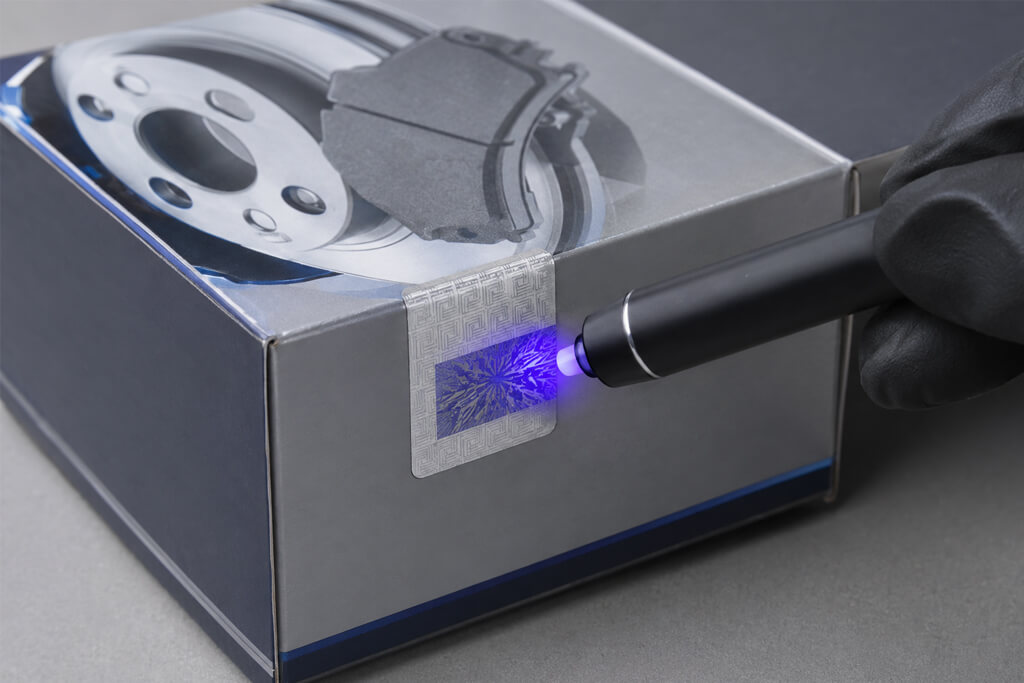
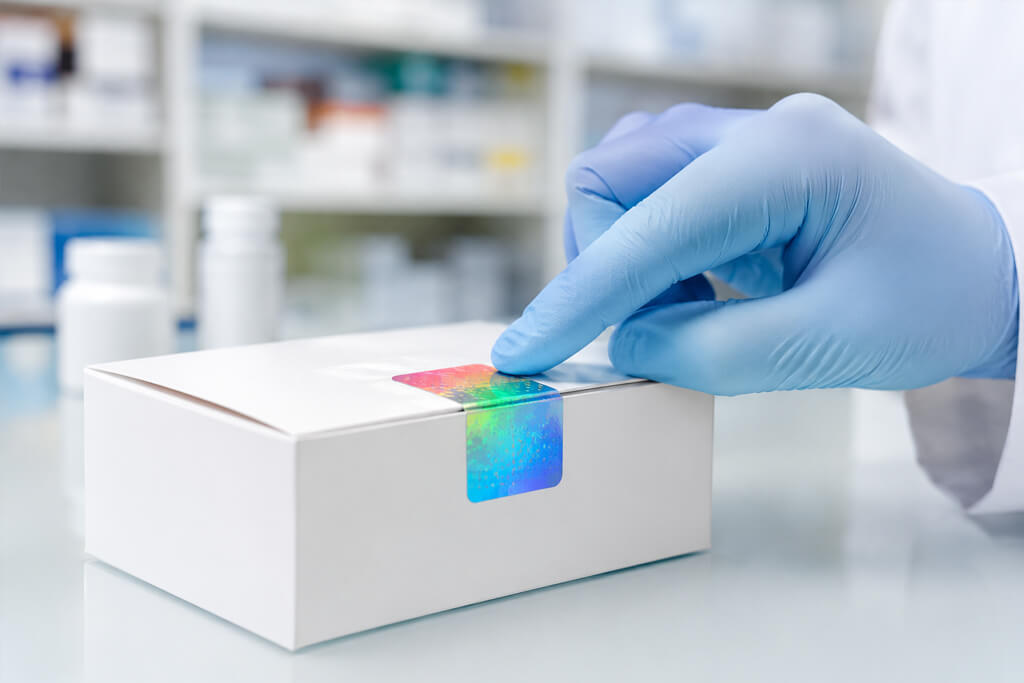
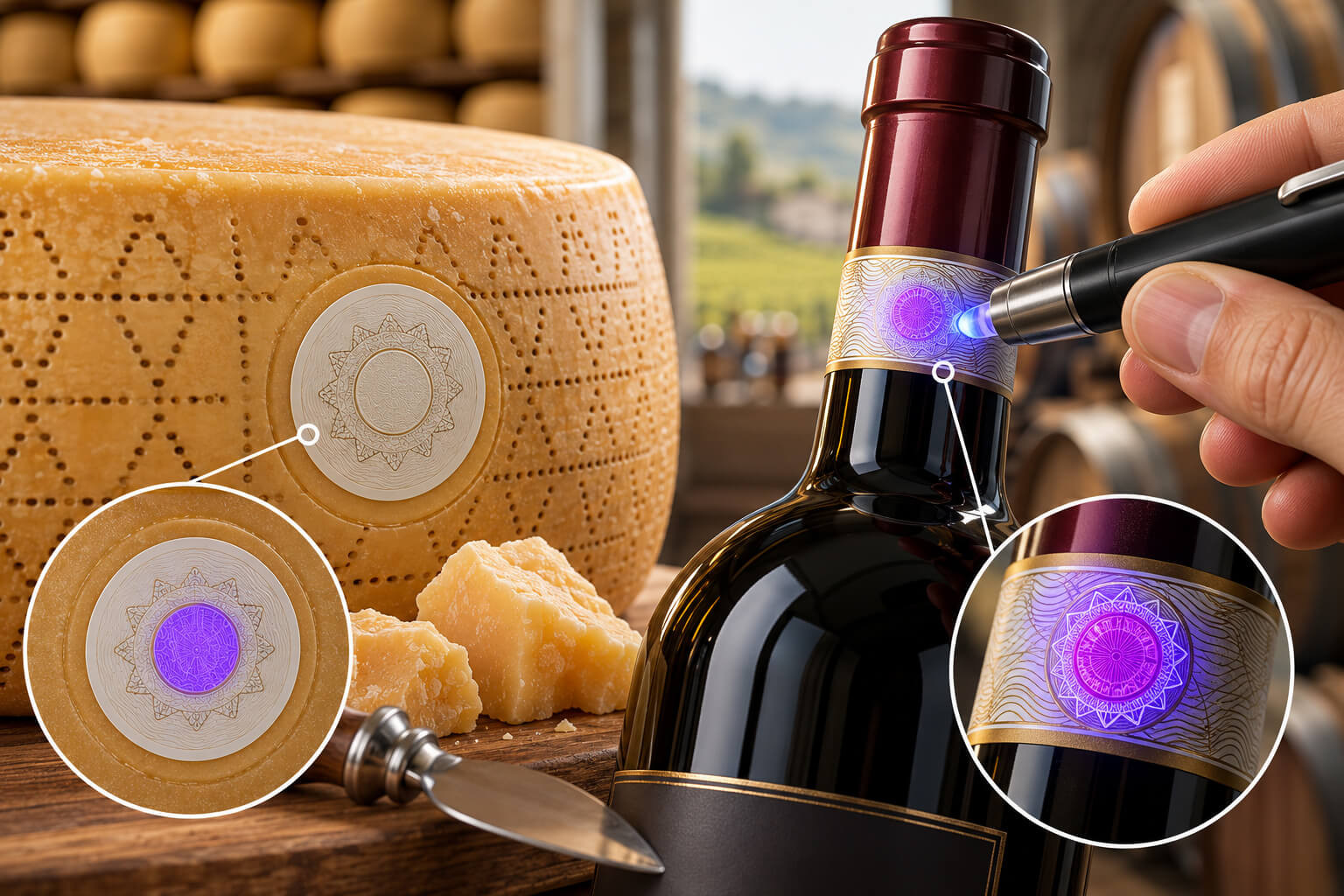
The anti-counterfeiting application represents one of the highest value-added uses of photosensitive inks. The immediate and unequivocal visual response to UV exposure constitutes a rapid and reliable verification element.
Particularly suitable for: Authenticity labels, Luxury and premium brand products, Packaging with UV-verifiable indicators, Guarantee seals for industrial and commercial products -
Emotional packaging and experiential marketing
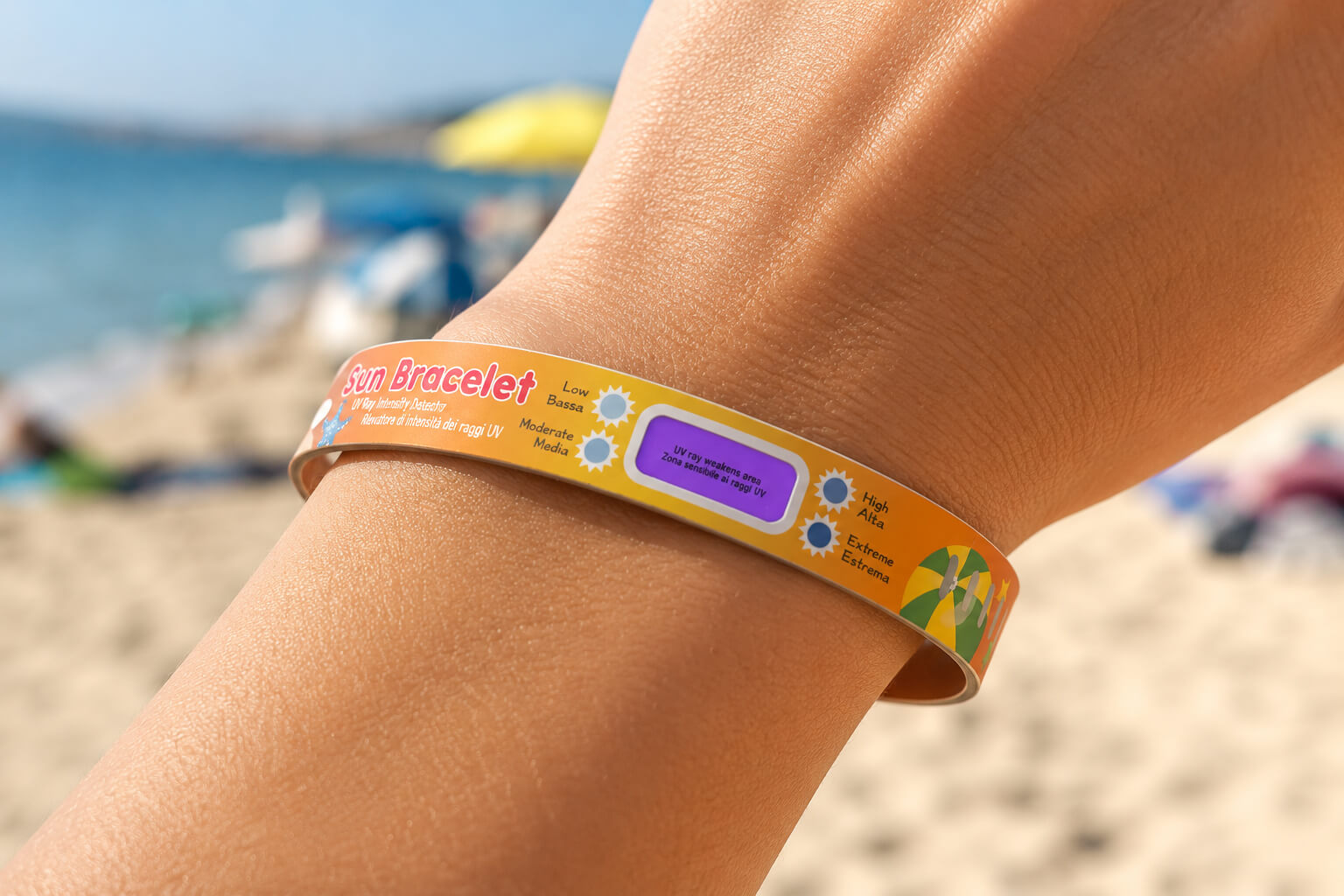
The dynamic visual effect activated by sunlight or a UV pen creates an interactive experience. Typical applications: Promotional cards and marketing materials linked to sun exposure, Emotional and informative packaging, Interactive labels for seasonal campaigns linked to sun exposure, Display materials for point of sale (POP, display) -
Educational and recreational products
Educational and recreational products with interactive UV effects, Children's publishing and educational kits
Photosensitive Ink Application Examples
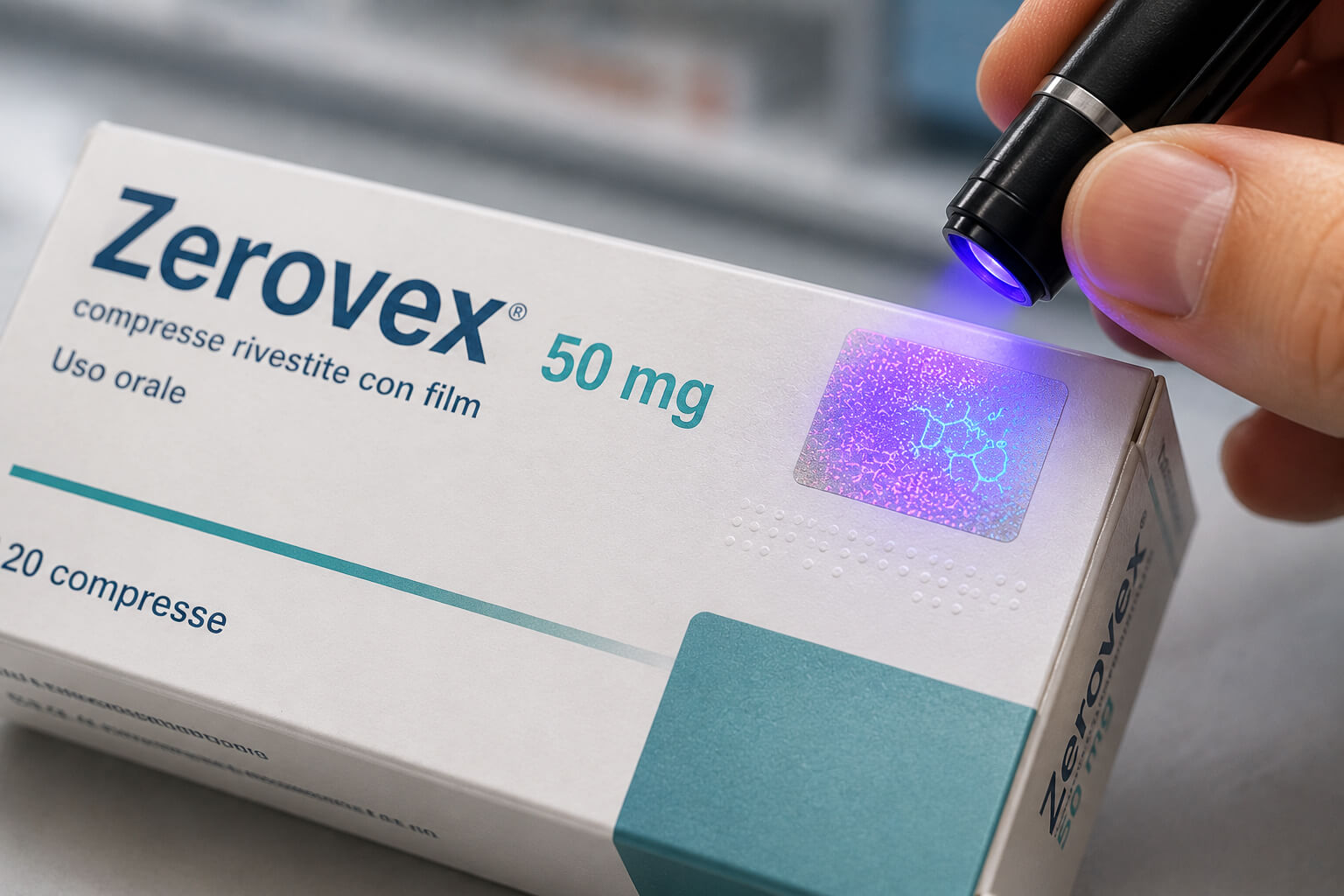
FAQ — Photosensitive Inks
How do photosensitive inks work?
In the absence of ultraviolet (UV) radiation, the photosensitive ink appears transparent or colourless. When exposed to sunlight or an artificial UV source, the pigment is activated and the ink colours rapidly. Once the UV source is removed, the ink returns spontaneously to its transparent state.
How long does the ink take to return to transparent after UV removal?
The return to the transparent state occurs spontaneously, generally within a few minutes of the UV source being removed (indicatively within 5 minutes), without the need for any external intervention. The speed of return depends on the intensity of the UV light to which it was exposed.
Why are photochromic pigments formulated in Capsular Ink?
Photochromic pigments are sensitive to prolonged exposure to oxygen, moisture and out-of-range UV radiation, which rapidly degrade their properties. The Capsular Ink formulation resolves this issue by integrating the pigment within a matrix that isolates it from degrading agents, extends the number of activation-deactivation cycles and enables its use in printable inks.
Which printing techniques are compatible?
Photosensitive inks are compatible with screen printing (preferred technique) and flexography. Screen printing allows thicker deposits and lower mechanical stress on the capsules. Flexography is suitable for high-volume production but requires careful control of process parameters.
Which substrates can be printed on?
Compatible substrates include paper and cardboard (including coated), plastic materials (PET, PP, PE), self-adhesive labels.
Is the photochromic effect permanent or does it fade over time?
The duration of the photochromic effect depends on the number of activation cycles and the conditions of use. The Capsular Ink formulation extends the functional life of the pigment.
Can photosensitive inks be used for anti-counterfeiting applications?
Yes. The immediate and verifiable visual response with any UV source (e.g. UV pen) is difficult to replicate without access to the original technology. They are suitable for authenticity labels on industrial and luxury products, guarantee seals and packaging.
What is the difference between photosensitive inks and thermosensitive inks?
Photosensitive inks react to UV light (they change colour in the presence of ultraviolet radiation and return to transparent in the absence of UV), while thermosensitive inks react to temperature variations. The choice depends on the desired effect and the application: UV inks are ideal for interactions linked to sun exposure, while thermosensitive ones are more suitable for temperature indicators and interactive packaging.
Are photosensitive inks compatible with printing in combination with other inks?
Yes, they can be used in combination with traditional inks in the same print job, allowing graphics to be created that reveal messages, images or additional colours only under UV light.
How can I request samples or initiate a technical evaluation?
To request samples or initiate an evaluation, please fill in the contact form on the IPS website or contact the team directly.
IPS follows a structured process for the development of new applications: analysis, strategy, prototyping and industrialisation.
- IPS Products
- New Project Development
- Analysis of raw materials
- Definition of the microencapsulation strategy
- Experimentation and Prototyping
- Optimization of the process and industrialization
- Microencapsulable Materials
If the material of interest is not listed, please fill out the form to request more information.
List of Microencapsulated Materials (tested)
- Thermosensitive
Liquid Crystals
Thermochromic Pigments
- Photosensitive
Photochromic Pigments
- If the material of interest is not listed, please fill out the form to request more information.
- Request Information
- 100% Italian Quality and Technology
Do you have a
microencapsulation project?
Fill out the form to receive more information or to be contacted by our team.








Pages
Legal menu
Contacts
I.P.S. International Products & Services s.r.l.
Address
Via Civesio, 6
20097 San Donato Milanese (MI) – Italy
E- Mail
[email protected]
Phone
+39 02.527.9641
VAT IT02826140150