
Microgel
Versatile particles with controlled release
Microgel is a hydroalcoholic solution enclosing microscopic portions of lipophilic raw material. The size of these microparticles is below 10 microns and this process does not involve the use of gelatin.
Unlike slurry microcapsules or powder microcapsules, Microgel does not feature a coating membrane: the active ingredient droplets are stabilised directly within the hydroalcoholic matrix, without a polymer shell enclosing them. The microparticles, with sizes below 10 microns, are significantly smaller than standard microcapsules, making them particularly suitable for applications requiring fine, homogeneous distribution of the active ingredient on the substrate.
The formulation presents as a gel with an acidic pH.
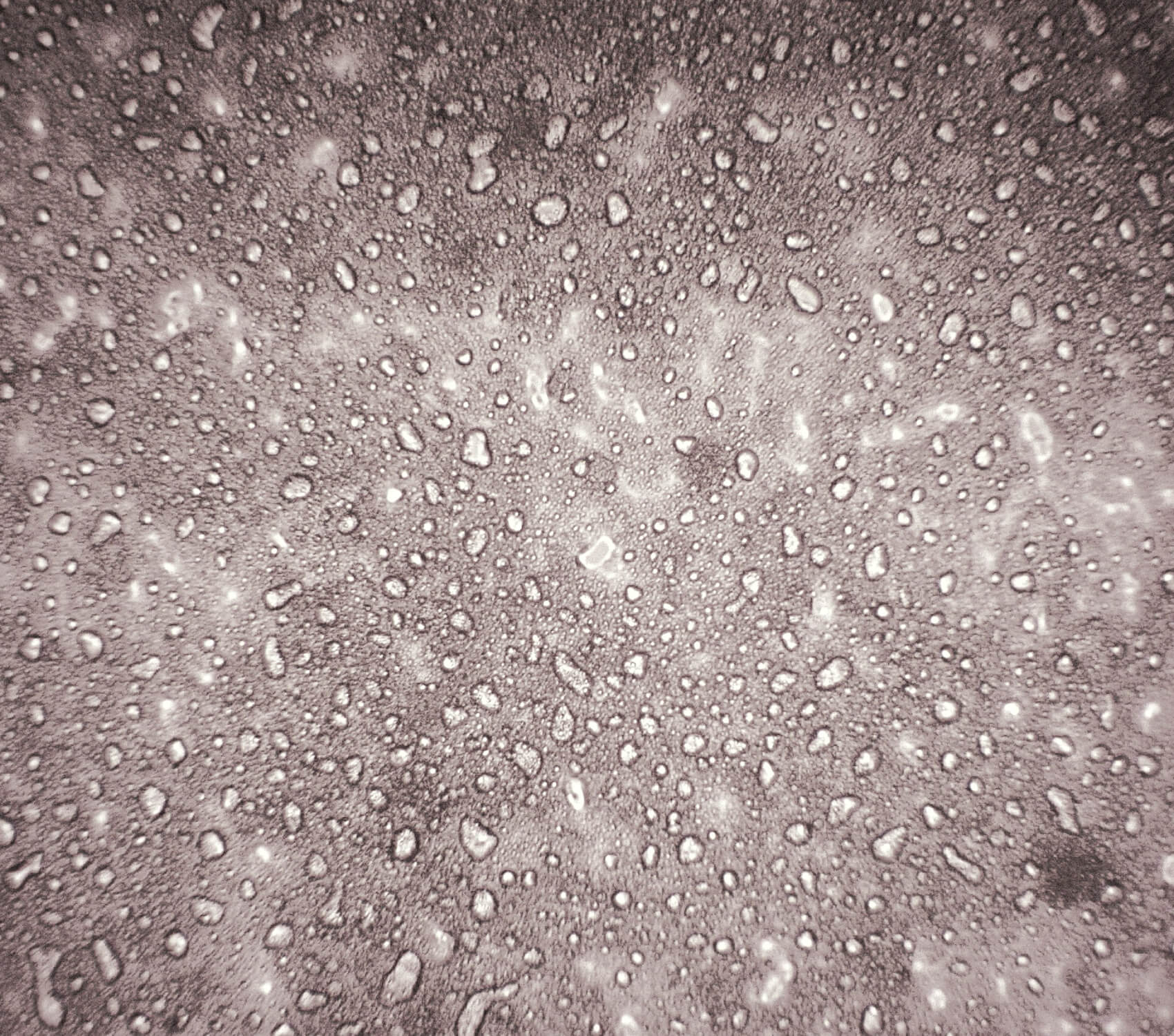
Microgel vs. Microcapsules: KEY DIFFERENCES
| Microgel | Slurry microcapsules | |
|---|---|---|
| Structure | Droplets dispersed in a hydroalcoholic matrix, without a membrane | Core-shell structure: active core with gelatin membrane |
| Presence of membrane | No — direct and immediate release | Yes — release controlled by membrane rupture |
| Initial olfactory response | Very intense — amplified by the action of alcohol | Gradual — mediated by the capsule membrane |
| Particle size | < 10 µm | 20 – 500 µm |
| Components of animal origin | None — Vegan friendly | Gelatin (animal origin) as wall material |
| Physical form | Hydroalcoholic gel with acidic pH | Aqueous suspension |
Vegan friendly: a concrete competitive advantage
Technical parameters
| Parameter | Value / notes |
|---|---|
| Physical form | Hydroalcoholic gel |
| Particle size | < 10 µm |
| pH | Acid |
| Presence of membrane | None — structure without polymer shell |
| Components of animal origin | None — Vegan friendly |
| Encapsulable raw materials | Fragrances, essential oils and other lipophilic active ingredients |
Technical specifications
-
Vegan friendly
The microgel formulation contains no substances of animal origin -
Functional versatility
Microgel can be formulated to respond to a wide range of stimuli, making it adaptable to multiple applications -
Controlled release capacity
It can be loaded with active agents that are released in a precise and controlled manner, improving the efficacy and stability of the active ingredients themselves -
Immediate and intense olfactory response
Unlike membrane microcapsules, in Microgel the active ingredient is not retained by a shell: contact with the substrate ensures a very strong initial olfactory response, further amplified by the evaporating action of the alcohol present in the formulation. -
Ultrafine particle size
Microparticles below 10 µm ensure homogeneous distribution and fine penetration into the substrate, ideal for textile applications by coating or immersion.
Application examples
-
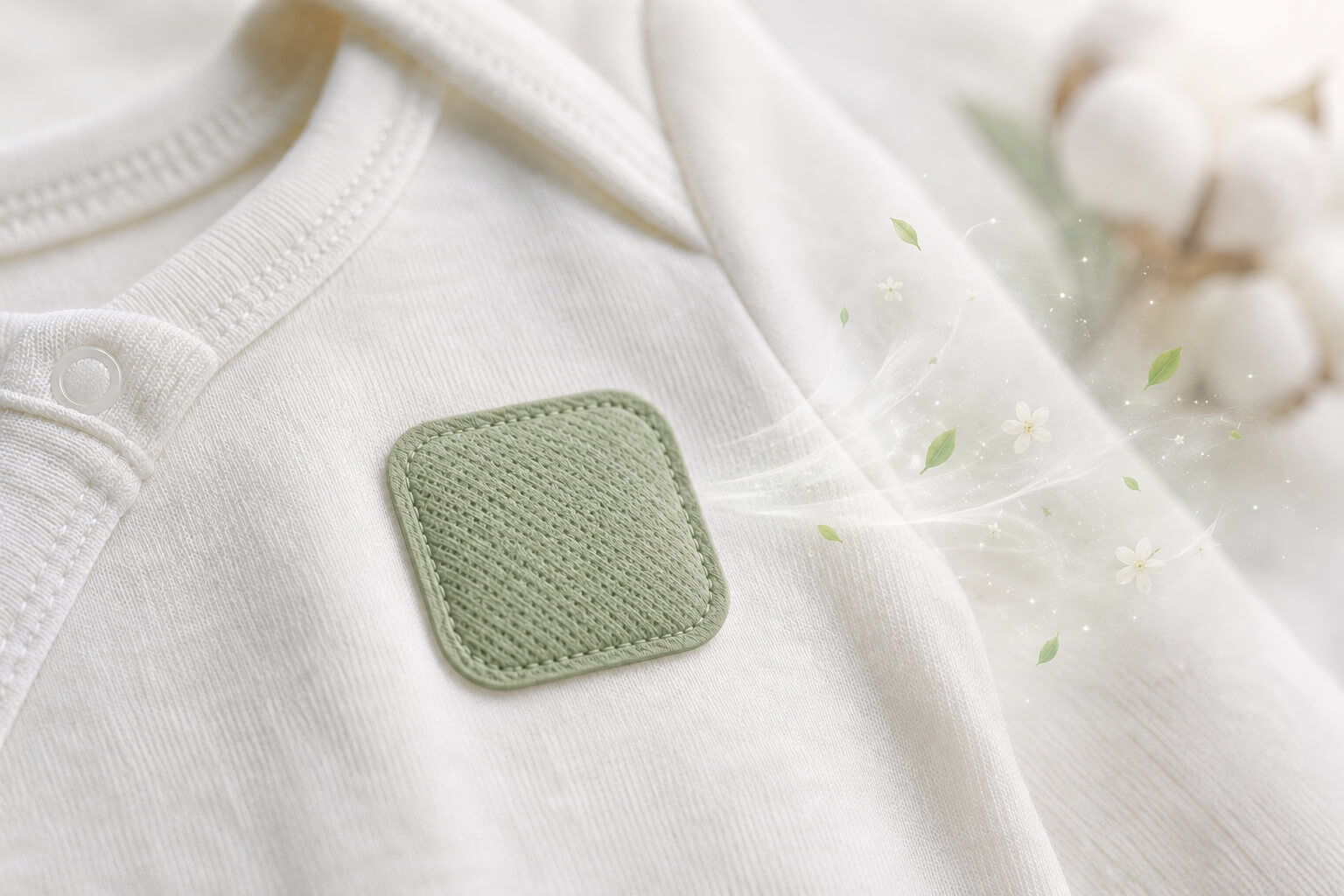
Textile sector — Main application
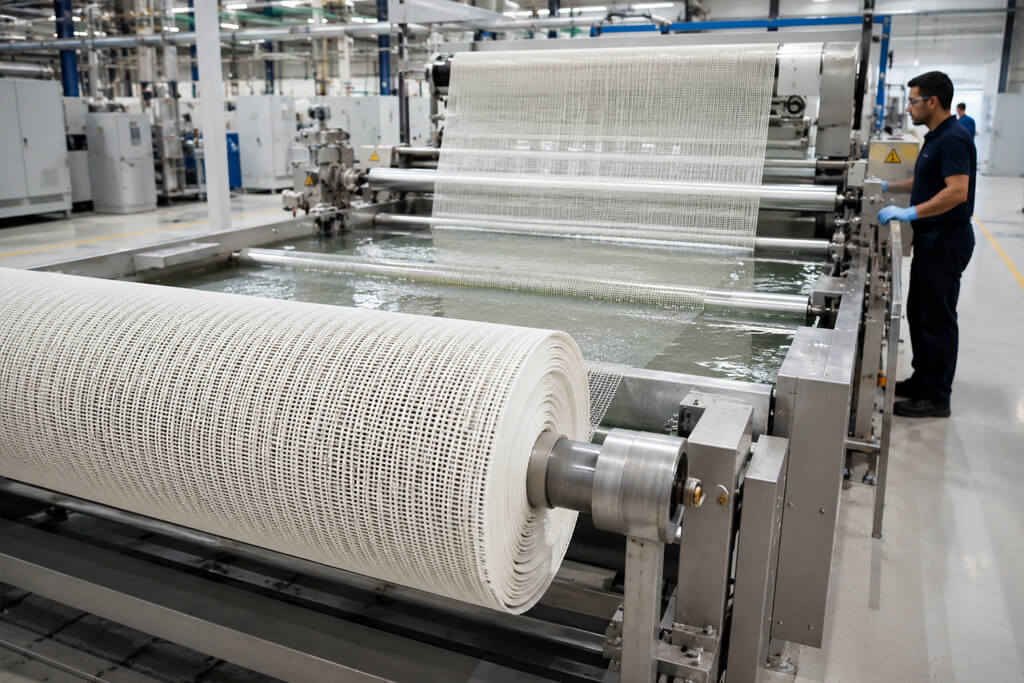
Microgel is applied in the textile sector by coating or immersion, enabling fragrances and active ingredients to be transferred directly onto yarns and textile products:
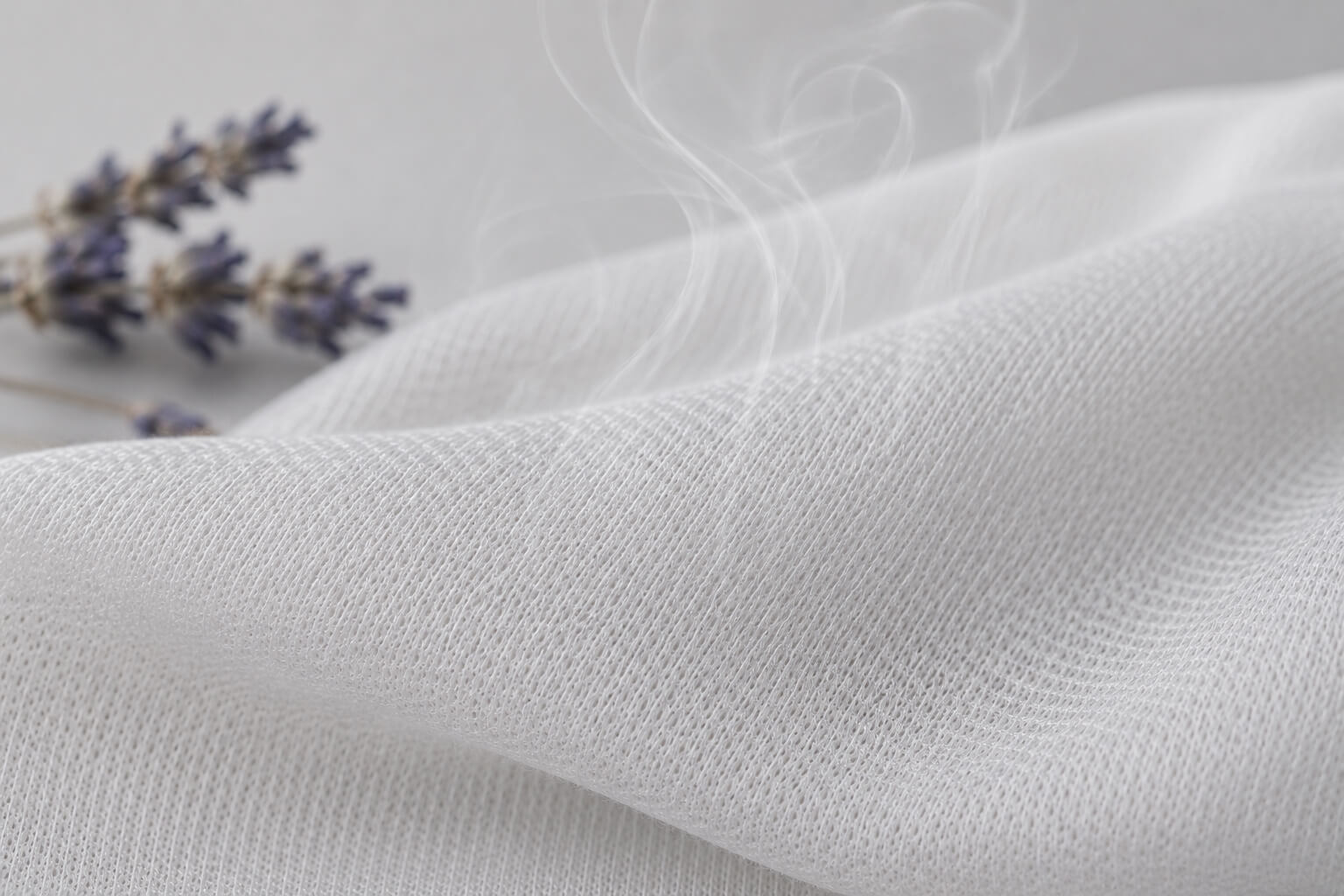
• Scented hosiery and tights: Microgel is applied to the fabric ensuring an initially intense and long-lasting fragrance
• Clothing and textile accessories with olfactory or functional properties
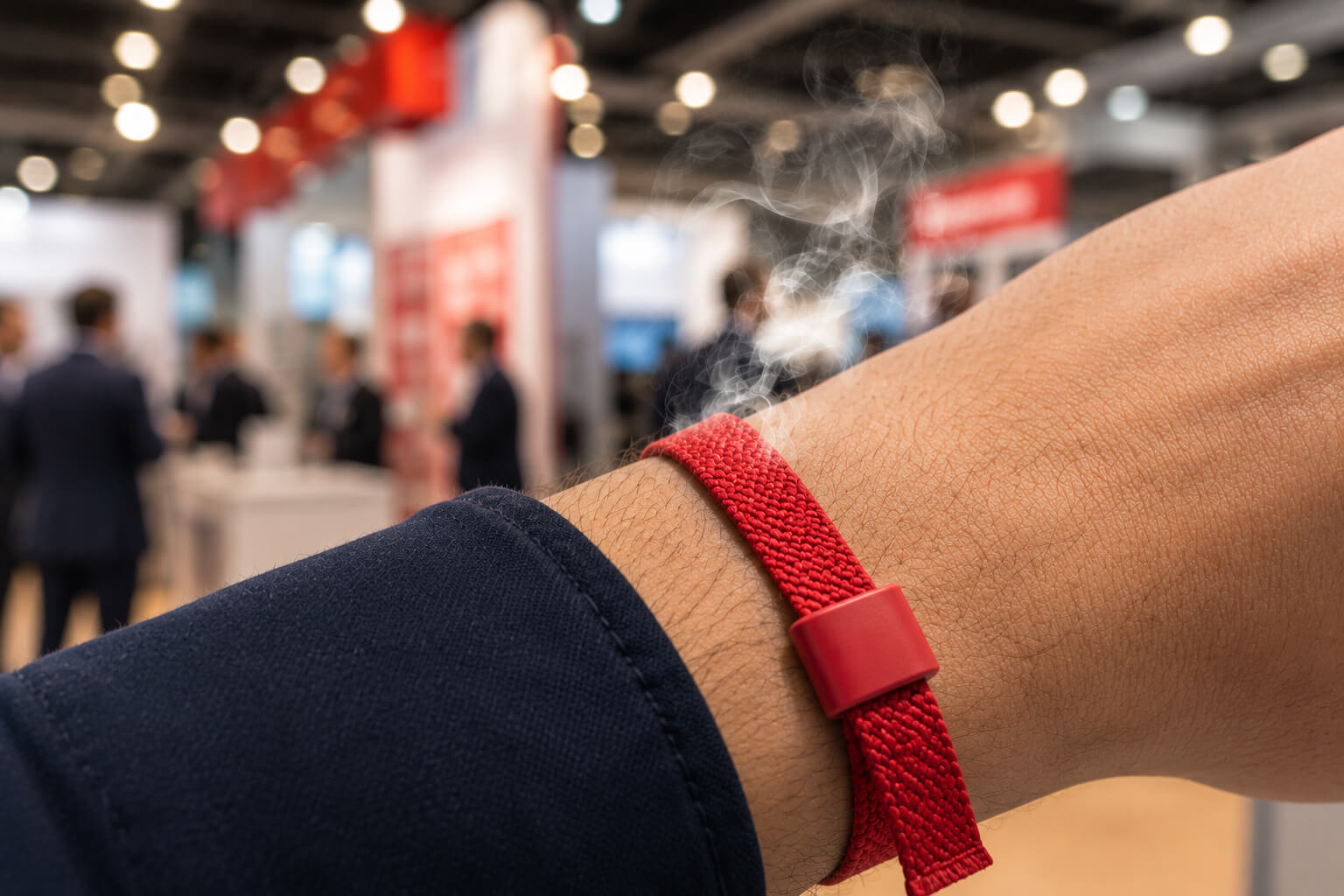
• Bracelets and promotional items in scented fabric or cord
• Functional finishes for technical textiles with essential oils or active ingredients
Potential application developments
The characteristics of Microgel — ultrafine particle size, vegan formula, immediate response of the active ingredient and compatibility with coating and immersion processes — make it potentially interesting for a range of applications currently under exploration. To assess the technical feasibility of new applications, IPS offers a dedicated development and prototyping service.
IPS Microgel Application Examples
FAQ — Microgel
What is Microgel and how does it differ from microcapsules?
Microgel is a hydroalcoholic formulation in which microscopic droplets of lipophilic active ingredient are dispersed within the matrix without a coating membrane. Unlike microcapsules (which have a core-shell structure with a polymer shell), Microgel has no membrane: the active ingredient droplets are stabilised directly within the hydroalcoholic matrix. This results in more immediate and intense release characteristics compared to microcapsules.
Is Microgel vegan friendly?
Yes. Microgel contains no substances of animal origin: neither gelatin nor any other animal-derived ingredients are present in the formulation. This makes it compatible with applications and markets that require vegan products.
What is the particle size in Microgel?
The microparticles in Microgel have a size below 10 microns, significantly smaller than standard microcapsules (which range from 20 to 1,500 µm depending on the type). This ultrafine size ensures homogeneous distribution and fine penetration into the substrate.
What is the physical appearance of Microgel?
Microgel presents as a gel with an acidic pH. It is a hydroalcoholic formulation, meaning the product base is a mixture of water and alcohol.
How is the active ingredient released in Microgel?
In Microgel there is no membrane regulating release: the active ingredient droplets are in direct contact with the hydroalcoholic matrix. Upon application to the substrate or distribution on the surface, the active ingredient is released in a rapid yet gradual manner. The alcohol present in the formulation amplifies the initial response, particularly for fragrances (rapid evaporation effect that brings the fragrance into contact with the sense of smell).
What is the difference in olfactory response between Microgel and scented microcapsules?
In which production processes does Microgel integrate?
Microgel integrates into coating and immersion processes, typical of the textile sector. The gel formulation is easily applicable to yarns and textile products through these processes, enabling fragrances or other active ingredients to be transferred directly onto the fabric.
What are the currently established applications of Microgel?
The main and most established application is the textile sector: scented hosiery and tights (application by coating or immersion), accessories and promotional items in scented fabric or cord (e.g. scented bracelets). For new applications, IPS offers a dedicated development and prototyping service.
Which active ingredients can be incorporated into Microgel?
Microgel can be formulated with fragrances and lipophilic essential oils. For specific raw materials not included in the standard offering, a compatibility assessment with the process can be requested.
How can I request samples or initiate a technical evaluation?
To request samples or initiate an evaluation, you can fill in the contact form or contact the IPS team directly. IPS follows a structured process for the development of new applications → Find out more:
- Analysis of raw materials
- Definition of the microencapsulation strategy
- Experimentation and prototyping
- Optimisation and industrialisation
- IPS Products
- New Project Development
- Analysis of raw materials
- Definition of the microencapsulation strategy
- Experimentation and Prototyping
- Optimization of the process and industrialization
- Microencapsulable Fragrances
If the fragrance is not listed, please fill out the form to request more information.
List of Microencapsulated Fragrances (tested)
- FRUITY
Apricot
Pineapple
Watermelon
Sweet Orange
Banana
Citron
Cherry
Coconut
Lemon
Mandarin
Apple
Pear
Peach
Grapefruit
- FLORAL
Chamomile
Orange Blossom
Wildflowers
Jasmine
Lavender
Rose
Violet
- HERBACEOUS AND AROMATIC
Eucalyptus
Mint
Myrtle
Oregano
Rosemary
Green Tea
- SPICY
Star Anise
Cinnamon
Licorice
Vanilla
Ginger
- WOODY AND MUSKY
Pine
Sandalwood
Tobacco
- GOURMAND
Coffee
Cappuccino
Chocolate
Bitter Almond
Hazelnut
- FRESH AND CLEAN
Talcum Powder
- If the fragrance you're interested in isn't listed, fill out the form to request more information.
- Request Information
- 100% Italian Quality and Technology
Do you have a
microencapsulation project?
Fill out the form to receive more information or to be contacted by our team.








Pages
Legal menu
Contacts
I.P.S. International Products & Services s.r.l.
Address
Via Civesio, 6
20097 San Donato Milanese (MI) – Italy
E- Mail
[email protected]
Phone
+39 02.527.9641
VAT IT02826140150